
ZIABRIDGE
Quality You Can Trust. Global Solutions You Can Rely On.
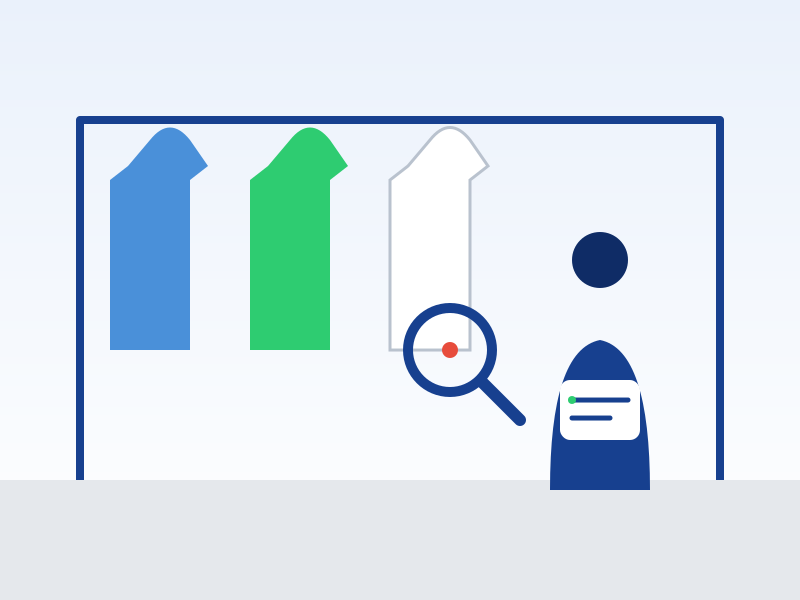
Reference illustration — will be replaced with a real photo.
Line balancing means spreading the total workload evenly across every workstation, so no single station holds up the rest of the line. An unbalanced line shows up as bundles piling up in front of one machine while other operators sit idle waiting for work — even though everyone is technically "working."
A bottleneck is the single slowest workstation in the sequence — the one whose cycle time is highest. No matter how fast every other station works, the line's overall output can never exceed what the bottleneck station can produce. This is why fixing the bottleneck, not the fastest station, is almost always the right place to focus improvement effort.
Timing every workstation and comparing cycle times side by side quickly reveals which one is the slowest — the bottleneck stands out clearly on a simple bar chart.
Assigning an extra machine or an additional operator to just the bottleneck operation, splitting its workload across two workstations instead of one.
Moving part of the bottleneck's task content to a nearby, less-loaded operator, evening out the workload without adding a machine.
Simplifying or re-sequencing the bottleneck operation itself — a jig, guide, or attachment can sometimes cut its cycle time without adding any resources at all.